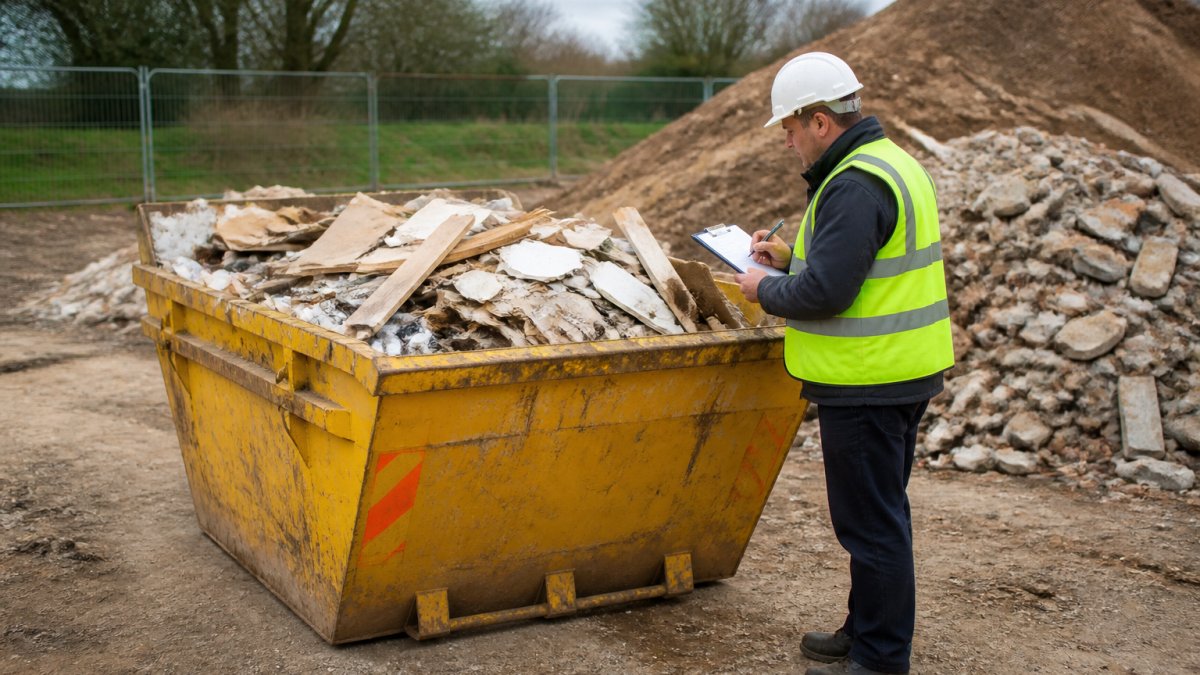
 how-to
How Do Contractors Avoid Waste Disposal Fines?
Last Updated: October 25, 2026
Quick Summary
Contractors avoid waste disposal fines by following the construction waste duty of care: check the carrier is registered, confirm the destination site has a valid permit or exemption, and keep written transfer notes for every load for at least two years. You own the waste until you can prove it went somewhere legal.
- Waste disposal fines hit the contractor who hands over the waste, not just the carrier.
- The duty of care comes from the Environmental Protection Act 1990 and the Waste (England and Wales) Regulations 2011.
- Keep a copy of every waste transfer note for at least two years.
- A lower-tier carrier cannot legally take construction waste, so check the public register.
- Asbestos, solvents, oils and contaminated soils need separate handling and a permitted destination.
Table of Contents
- Why Waste Disposal Fines Land on Contractors, Not Just the Carrier
- Construction Waste Duty of Care: What the Law Actually Requires
- Waste Transfer Note Requirements for Every Load You Hand Over
- How to Run a Registered Waste Carrier Check Before You Book
- Hazardous Waste Disposal for Contractors: Separate It or Pay for It
- Booking Grab Hire That Keeps Your Paperwork Straight
- Frequently Asked Questions
Why Waste Disposal Fines Land on Contractors, Not Just the Carrier
Waste disposal fines hit the contractor who hands over the waste, not just the firm that drives it away. That single fact catches out more site managers than any other rule.
The law here is the construction waste duty of care. It sits with whoever produces the waste. So if your muck ends up fly-tipped in a field, the trail leads back to you. Avoiding waste disposal fines for contractors starts with one mindset shift: you own the waste until you can prove it went somewhere legal.
Below, we break down the checks that keep your site clean and your name off any enforcement list.
Construction Waste Duty of Care: What the Law Actually Requires
Construction waste duty of care is the legal duty on anyone producing, carrying, keeping or disposing of waste to store it safely and hand it only to an authorised person. In practice, that means you must take reasonable steps to confirm where your waste goes.
The duty comes from the Environmental Protection Act 1990 and the Waste (England and Wales) Regulations 2011. The Environment Agency guidance on duty of care for waste sets out what "reasonable steps" means. You cannot simply hand a load to the first firm that quotes.
The three checks that protect you
- Check the carrier is registered. Ask for their registration number and confirm it.
- Check the destination is permitted. The site receiving your waste needs a valid permit or exemption.
- Check the paperwork. Get a written description of the waste and keep your transfer notes.
Miss any one of these and you carry the risk. A common mistake is trusting a verbal "we're registered" and never writing the number down.
The duty of care boils down to three checks you must be able to prove you made.
| Check | What to confirm | Why it matters |
|---|---|---|
| Carrier registration | Ask for the registration number and confirm it | Verbal claims are not enough |
| Destination permit | Receiving site has a valid permit or exemption | You must know where waste goes |
| Paperwork | Written description of waste and transfer notes kept | Missing any one check leaves you carrying the risk |
Waste Transfer Note Requirements for Every Load You Hand Over
A waste transfer note is a written record that passes responsibility for a load from one party to the next. Every load you hand over needs one, and you must keep a copy for at least two years.

What a compliant note must contain
- A clear description of the waste, including its type and quantity
- The waste hierarchy classification, such as whether it can be reused
- Your details and the carrier's, including registration numbers
- The permitted address where the waste is going
- The date of transfer and signatures from both sides
Get this right and a spot check becomes a five-minute conversation. Get it wrong and you are explaining yourself to an enforcement officer. The GOV.UK waste transfer notes guidance confirms the two-year retention rule, so keep them filed, not lost in a van.
How to Run a Registered Waste Carrier Check Before You Book
A registered waste carrier check is a quick look-up to confirm a firm holds a valid carrier registration before you let them take a single load. It takes minutes and it is your best defence.
Here is how we would do it:
- Ask the firm for their carrier registration number.
- Search the public register on the Environment Agency public register.
- Confirm the registration is current and covers the waste type.
- Save a screenshot of the result against the job.
- Repeat for any subcontractor they bring in.
What most guides miss is that the register can show expired or lower-tier registrations. A lower-tier carrier cannot legally take construction waste. If the entry does not match the job, walk away.
Hazardous Waste Disposal for Contractors: Separate It or Pay for It
Hazardous waste disposal for contractors means keeping dangerous materials out of your general muck. Asbestos, solvents, oils, and contaminated soils cannot go in a standard grab. They need separate handling, separate paperwork, and a permitted destination.
Mix hazardous waste into a general load and you can lose the whole load, plus face enforcement. The Health and Safety Executive guidance on asbestos is clear that asbestos removal and disposal follow strict rules. A small landscaping outfit pulling out an old shed can hit this without realising.
Our advice: if you are unsure what is in a structure, stop and get it assessed. It is cheaper than a rejected load and far cheaper than a fine.
Booking Grab Hire That Keeps Your Paperwork Straight
Booking grab hire that keeps your paperwork straight is the simplest way to stay compliant. A reputable grab firm arrives with the right registration, issues a proper transfer note, and takes the load to a permitted site.
We provide grab hire with a driver, muck away, and aggregate delivery across the region. You get a compliant transfer note for every load, and our team can talk you through the carrier and destination checks before you book.
Pricing depends on quantity, dates, and delivery, so get in touch for a current quote rather than guessing at a figure.
Frequently Asked Questions
How can contractors avoid waste disposal fines?
Check that every carrier you use holds a valid upper-tier waste carrier registration before they touch your waste, and keep the registration details on file. Record each transfer on a waste transfer note, including the EWC code, quantity and destination, and keep copies for at least two years. Store non-hazardous and hazardous waste separately, and never let a third party remove material without a signed note. If waste is later fly-tipped, the duty of care sits with you as the producer, so the paper trail is your defence.
Who is responsible if a contractor's waste is fly-tipped?
Under the duty of care in section 34 of the Environmental Protection Act 1990, the waste producer retains responsibility for how it is handled. If your waste is fly-tipped and you cannot show you took reasonable steps, the regulator can pursue you rather than the carrier. That means a signed waste transfer note, a checked carrier registration and a named destination. Contractors who skip those checks have been prosecuted even when they never touched the fly-tipped material themselves.
How can I check whether a waste Carrier is registered?
Ask the carrier for their registration number and the name it is held under, then verify it against the public register held by the environmental regulator for your part of the country. Match the trading name and registration number to the vehicle turning up on site. A carrier who cannot produce a number, or whose details do not match, should not take your waste. Keep a dated copy of the check with your project records so you can show due diligence later.
How should contractors manage hazardous construction waste?
Hazardous waste disposal for contractors starts with segregation at source. Keep asbestos, solvents, paints, oils, treated timber and contaminated soils in clearly labelled, sealed containers away from general skips. Hazardous loads need a separate consignment note and can only go to a site permitted to accept them. Never mix hazardous material into a general muck away load, because the whole load becomes hazardous and the cost and paperwork multiply. If you are unsure whether a material is hazardous, treat it as hazardous until confirmed otherwise.
The challenge is simple: keep every load traceable from your site to a legal destination. SA GRAB SERVICES supports that with grab hire with a driver, flexible delivery or depot collection, and clear paperwork on every job. Get started with SA GRAB SERVICES and keep your waste disposal fines risk at zero.
