 blog
How to Use Grab Hire for Residential Projects
Last Updated: 26 October 2026
Quick Summary
Yes, grab hire is suitable for residential projects, and it often beats a skip for homes with tight access or heavy waste loads. A grab lorry needs room to park and swing its arm, so check access before booking. The waste is cleared in a single visit with no skip left on site.
- Grab hire usually needs no road permit if loading happens on site.
- A grab lorry cannot take hazardous items such as asbestos, paint or chemicals.
- Tell the operator about low branches, phone lines and cables when you book.
- Keep waste close to the boundary so the crane arm can reach it.
- Ask for a waste carrier registration and a transfer note to meet your duty of care.
Table of Contents
- Is Grab Hire Suitable for Residential Projects?
- Grab Hire vs Skip Hire: Which Suits a Home Project?
- What Can a Grab Lorry Collect from a Home?
- Residential Grab Lorry Access Requirements
- Your Grab Hire Preparation Checklist
- Book a Residential Grab Hire Collection
- Frequently Asked Questions
Is Grab Hire Suitable for Residential Projects?
Yes, grab hire is suitable for residential projects, and it often beats a skip for homes with tight access or heavy waste loads. At SA GRAB SERVICES, we provide grab hire across Peterborough, Spalding, Wisbech, Holbeach, Whittlesey, Sleaford, Boston and the surrounding areas. Grab hire is a waste removal service where a lorry-mounted crane lifts a container onto the vehicle and takes the load away in one trip, with no skip left on site. That single-visit model is why it suits driveways, garden clearances and small renovations so well.
The catch is access. A grab lorry needs room to park and swing its arm, and not every residential street allows that. We'll cover the access rules further down, because getting them wrong is where most home projects run into trouble.
Below, we'll show you exactly how grab hire compares with skip hire, what a grab lorry can legally take from a home, and how to prepare so collection day runs smoothly.
Grab Hire vs Skip Hire: Which Suits a Home Project?
Grab hire wins when access is tight, the load is heavy, or you want the waste gone without a skip sitting on the road. Skip hire wins when you're producing waste slowly over several weeks and need somewhere to tip it as you go.
Here's how the two compare for a typical home project:
| Factor | Grab Hire | Skip Hire |
|---|---|---|
| Space needed | Lorry parks on road or driveway | Skip sits on road or drive |
| Permit | Usually not required if loading on site | Road permit often needed |
| Loading | You load the container, crane lifts it | You load the skip by hand |
| Best for | Heavy waste, tight access, one-off clearances | Steady waste over weeks |
| Speed | Cleared in a single visit | Collected when you call |
For most garden clearances and driveway jobs, though, grab hire removes the double handling and the permit paperwork.
What Can a Grab Lorry Collect from a Home?
A grab lorry collects most household renovation and garden waste, including soil, rubble, green waste, timber and old paving. It cannot take hazardous items such as asbestos, paint, chemicals or clinical waste, and those need a licensed specialist.
The typical residential load includes:
- Garden waste, branches, hedges and turf
- Soil, subsoil and excavated spoil
- Rubble, bricks, concrete and old paving slabs
- Timber, fencing and broken furniture
- General household clearance waste
Watch out: if you hire a grab lorry through an unlicensed operator and your waste ends up fly-tipped, the duty of care falls on you as the waste producer. How Do Contractors Avoid Waste Disposal Fines? Always ask for a waste carrier registration and a transfer note.
Residential Grab Lorry Access Requirements
A grab lorry needs a clear parking space of roughly the vehicle's length plus room for the crane arm to swing over your boundary. In practice, most residential streets can take one, but you should check three things before booking.
First, overhead obstructions. Low branches, phone lines and cables can block the crane arm, so tell the operator when you book. Second, parking. The lorry needs to pull up close enough for the arm to reach your waste without crossing a neighbour's property. Third, ground conditions. A loaded grab lorry is heavy, so a soft or block-paved driveway may not take the weight.
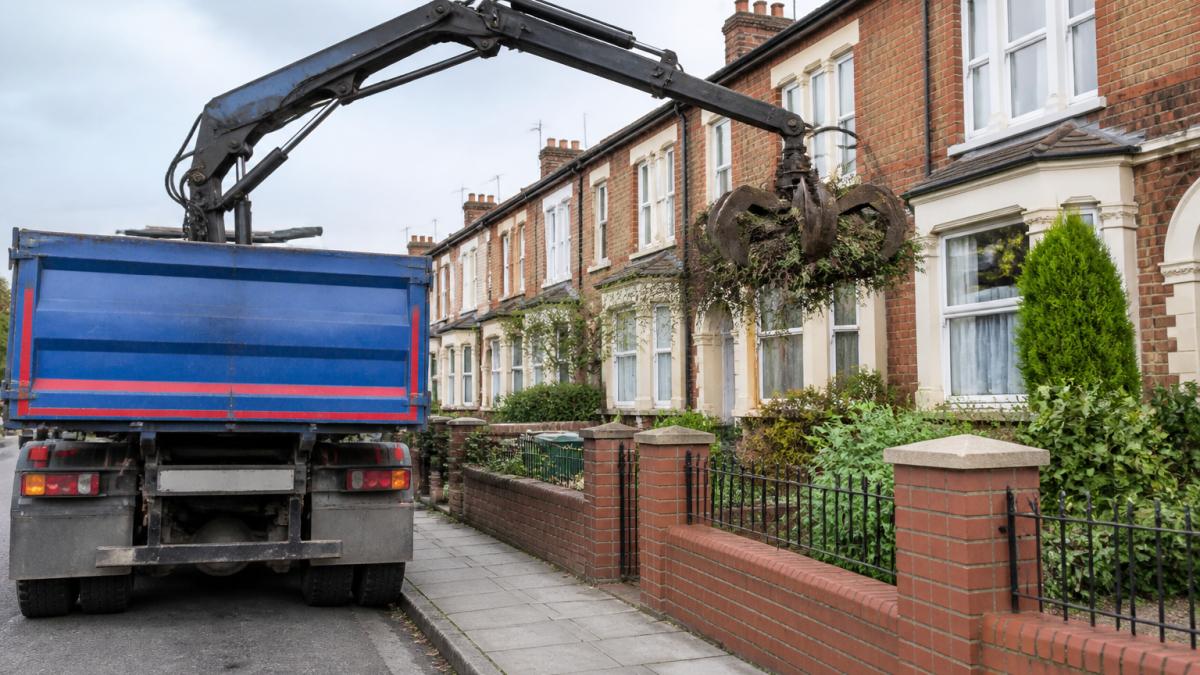
If access is genuinely impossible, a skip on a permit or a wait-and-load service may be the better route. Be honest with the operator about your street when you book, and they can tell you whether the lorry will fit.
Your Grab Hire Preparation Checklist
Preparation is what separates a smooth collection from a wasted visit. Work through this checklist the day before your booking:
- Clear a parking space close to the waste, and ask neighbours to move cars if needed
- Check for overhead cables, low branches and anything the crane arm could hit
- Move waste to one accessible spot within reach of the lorry
- Keep hazardous items separate and arrange specialist disposal
- Confirm the collection time and access details with the operator
- Have your waste transfer note ready to keep
A common mistake is piling waste at the back of the garden where the arm can't reach. In practice, this means the crew either can't load it or has to charge for extra handling. Keep the load close to the boundary and you'll avoid both.
Book a Residential Grab Hire Collection
The main challenge with residential grab hire is access and timing. SA GRAB SERVICES provides grab hire and aggregate supply across Peterborough, Spalding, Wisbech, Holbeach, Whittlesey, Sleaford, Boston and the surrounding areas, with digger hire and a driver available for groundworks and site preparation.
We offer flexible delivery or depot collection for aggregates, so your materials and waste removal can be arranged around the same project. Get started with SA GRAB SERVICES and clear your residential site in a single, properly documented visit.
Frequently Asked Questions
Is grab hire suitable for residential projects?
Yes, for most domestic jobs. A grab lorry collects soil, rubble, green waste and old paving in one visit, so it suits garden clearances, patio replacements and small renovations. The main condition is access: the lorry needs a clear run to park close enough for the crane to reach the waste. If your road is narrow, parked up, or the waste sits far from the kerb, a skip may work better. Ask the provider to check your address before booking.
Do I need a permit for grab hire at home?
Usually not, because the lorry stays on the road for a short collection rather than occupying a space for days. However, some councils require a permit or have parking restrictions on certain streets, and double yellow lines or bus stops are off limits. Confirm with your local authority if you are unsure, and tell the grab hire company about any restrictions when you book so they can plan the visit.
How much space does a grab lorry need?
As a rough guide, allow around 3 metres of road width and enough clear space for the vehicle to park alongside the waste. The crane arm can reach over walls, fences and parked cars, so the waste does not need to sit at the kerb, but it must be within the lorry's reach. Send the provider a photo of the street and where the waste is piled; they can confirm whether the lorry will fit before the day.
When is a skip a better option than grab hire for a domestic project?
Choose a skip when the job runs over several days and you need to add waste gradually, or when the lorry cannot reach your waste because of access. Skips also suit households that want to load at their own pace. Grab hire wins when the waste is heavy, bulky or already piled up, because one visit clears it without a skip sitting on the road. Compare the two against your access and timescale before deciding.