 ultimate-guide
Benefits of Professional Groundworks Services: Why Sites Need Them
Last Updated: 30 October 2026
Quick Summary
Professional groundworks services deliver three measurable outcomes: structural integrity, water management and lower whole-life cost. Verified compaction in layers gives foundations a predictable base, correct falls and sealed pipework prevent ponding and erosion, and fixing ground problems before concrete goes in avoids excavation, disposal and reinstatement later.
- Groundworks usually break down into four stages: site clearance, excavation and earthworks, layer compaction, then grading and finished levels.
- Compaction must be tested layer by layer before the next is placed, otherwise the formation settles unevenly under load.
- Verify drainage falls with a laser or pipe level before backfill, seal joints and test connections.
- Ask for public liability and employers' liability insurance, plus two contactable references from the last two years.
- Groundworks cost is driven by ground conditions, site access, drainage extent and how much spoil leaves site.
Table of Contents
- What Professional Groundworks Services Actually Cover
- Why Site Preparation Decides How the Rest of the Job Goes
- The Benefits: Stability, Drainage and Fewer Repair Costs
- Questions to Ask a Groundworks Contractor Before You Appoint One
- What Drives Groundworks Cost on a Typical Project
- Get Your Groundworks Plan and Quote Started
- Frequently Asked Questions
What Professional Groundworks Services Actually Cover
Groundworks services are the site preparation and civil engineering works that happen before and beneath a building, driveway or surfacing job, from clearing the plot to compacting the sub-base. The visible work usually gets the attention, and the ground underneath is often rushed. That is backwards, and it is expensive.
A proper scope of works usually breaks down into four stages, and skipping any one shows up later as movement, ponding or a failed surface.
From Site Clearance to Finished Levels
Site clearance and ground clearance come first: removing vegetation, spoil, old hardstanding and demolition arisings, then stripping topsoil and setting it aside for reuse. Excavation and earthworks follow, cutting and filling to the design levels.
Then comes the part that separates a professional job from a quick one: compaction in layers, each tested before the next goes down. Finally, grading and finished levels, set so water runs away from the building.
Where Grab Hire and Aggregates Fit In
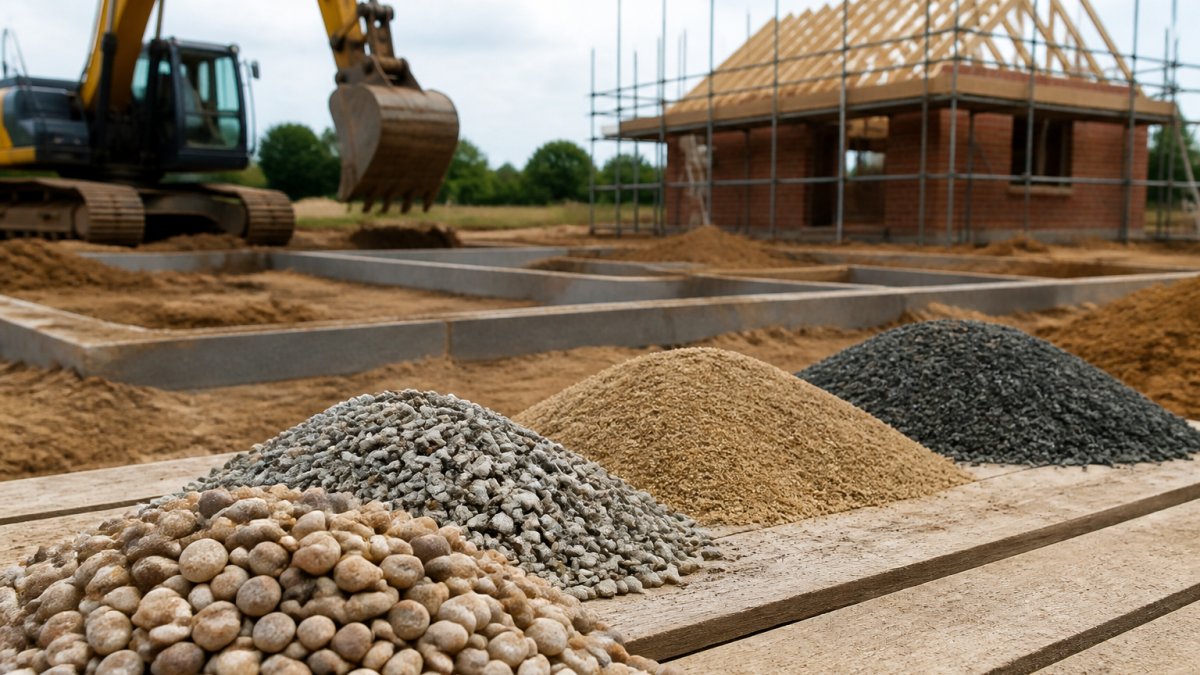
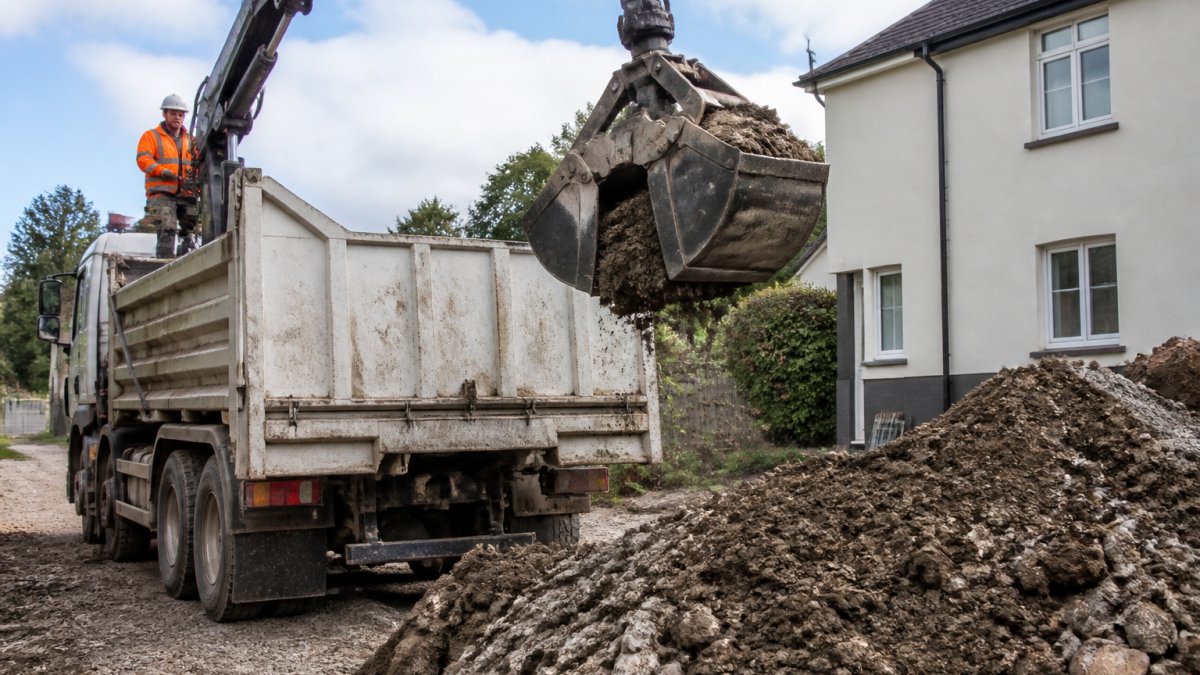
Grab hire and aggregate supply are not side services to groundworks; they are the logistics that keep the programme moving. Muck away clears excavated spoil in bulk, and aggregate delivery brings sub-base, drainage stone and topsoil back in on the same schedule, so the excavator never sits idle waiting for a wagon.
If you are planning a domestic project, our guide to using grab hire for residential projects sets out how the logistics work in practice. For quantities, calculating aggregate needs for construction gives you a straightforward method before you order.
Why Site Preparation Decides How the Rest of the Job Goes
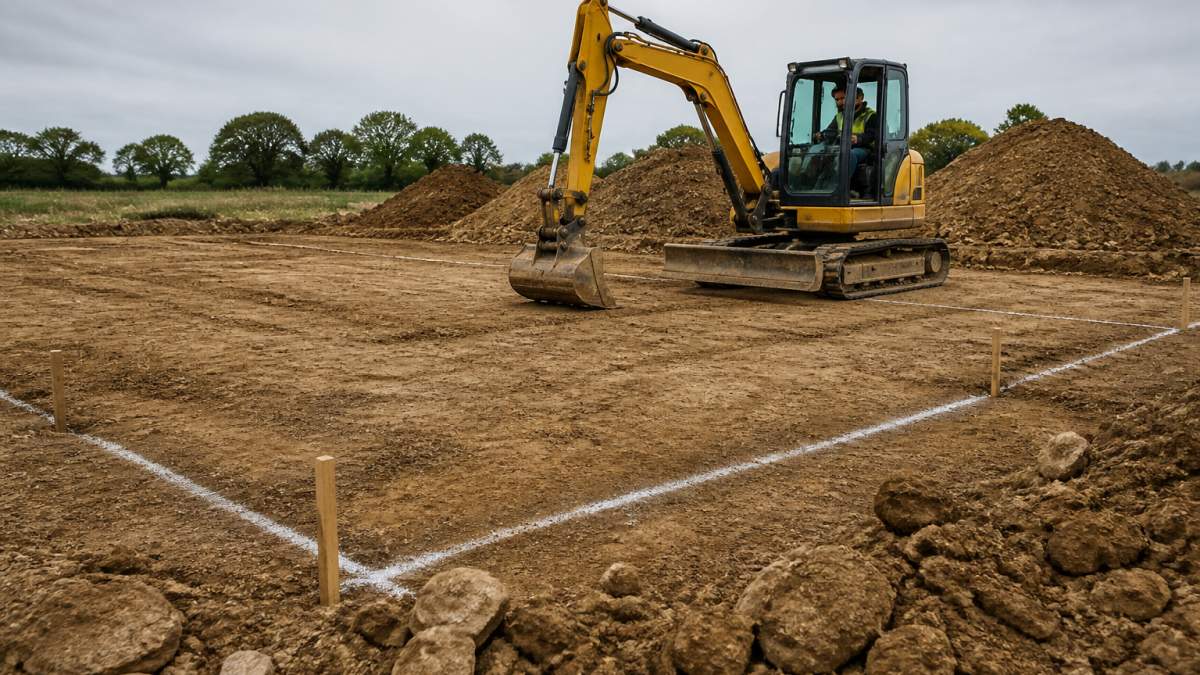
Ground conditions dictate everything downstream. A sub-base that was not compacted properly, or a formation that was not protected from rain, will not carry the load it was designed for, and no amount of quality concrete above it fixes that.
The CIRIA guidance on ground conditions and earthworks is worth reading before you sign off a specification, because it explains how much of the risk sits in the ground rather than the structure.
A common mistake is treating site preparation as a preliminary cost to be trimmed. In practice, it is the cheapest stage at which to fix a problem and the most expensive stage to revisit.
The Benefits: Stability, Drainage and Fewer Repair Costs
The case for professional groundworks services comes down to three measurable outcomes: structural integrity, water management and whole-life cost. Each has a mechanism behind it, and understanding that mechanism lets you judge whether a contractor is actually delivering it.
Stability and structural integrity. A properly prepared formation with verified load-bearing capacity gives foundations a predictable base, which matters on clay, on made ground and on any site with previous buildings.
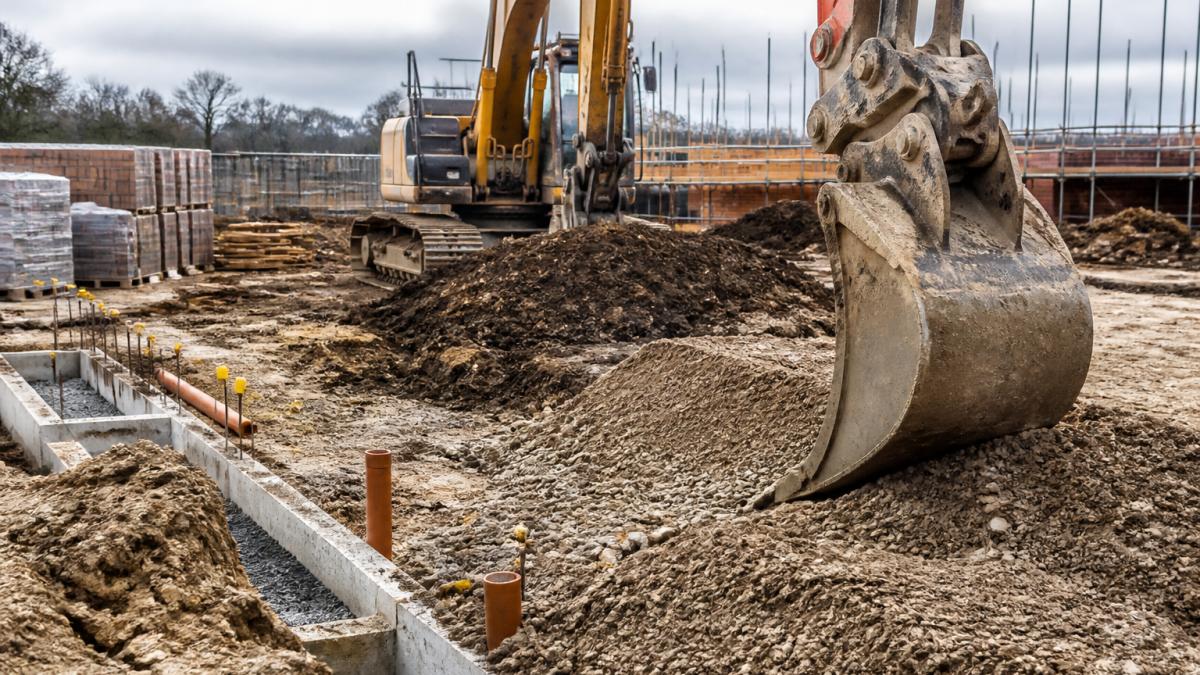
Drainage and surface water. Drainage, pipework and utility connections installed to correct falls and depths prevent standing water, settlement around gullies and the slow erosion that undermines a driveway edge.
Fewer repair costs and delays. Rework on drainage or a failed sub-base typically means excavation, disposal and reinstatement, all of which lands on the programme.
Safety and compliance. The Health and Safety Executive guidance on construction site management makes clear that groundworks carry real safety obligations, from excavation support to buried services.
| Outcome | What good groundworks deliver | What goes wrong without them |
|---|---|---|
| Stability | Verified compaction and load-bearing formation | Settlement, cracking, uneven surfaces |
| Drainage | Correct falls, sealed pipework, tested connections | Ponding, blocked runs, erosion at edges |
| Cost control | Right-first-time sub-base and levels | Excavation, disposal and reinstatement |
| Programme | Materials and muck away sequenced | Idle plant and delayed trades |
| Compliance | Waste documented, risks assessed | Fines and enforcement action |
Questions to Ask a Groundworks Contractor Before You Appoint One
Choosing a groundworks contractor is a commercial decision as much as a technical one. These questions separate a contractor who can evidence their work from one who cannot. Ask them before you appoint, not after the excavator arrives.
Experience and references. Ask how many projects of a similar scale and ground condition they have completed in the last two years, and for two references you can contact. A contractor who works mainly on new-build housing may not suit a renovation with limited access and unknown services. Ask specifically about the ground conditions they have worked in, clay, made ground, high water table, because that is where the risk sits.
Insurance and qualifications. Ask for evidence of current public liability and employers' liability insurance. Ask who holds the relevant competence for excavation and plant operation, and who supervises on site day to day.
Written quotation and scope. Ask for a written quotation stating what is included and, just as importantly, what is excluded.
Ground investigation and risk allocation. Ask what happens if ground conditions differ from the survey.
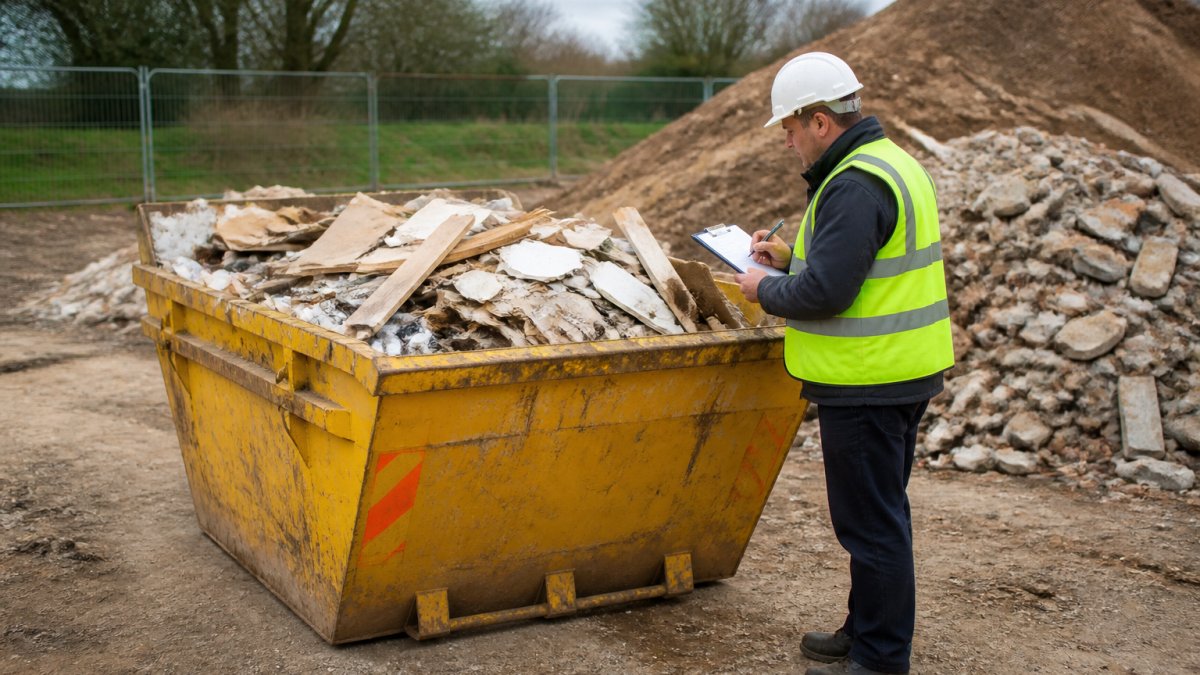
Waste and duty of care. On waste specifically, ask for the waste carrier registration and where arisings go. Our article on how contractors avoid waste disposal fines covers what proper documentation looks like. The Environment Agency guidance on waste duty of care sets out the legal position, and a contractor should be able to produce waste transfer notes on request.
Communication and programme. Ask who your point of contact is, how often you will receive updates, and what the programme assumes about other trades. Groundworks sit between clearance and the builder, so dependencies matter.
What Drives Groundworks Cost on a Typical Project
Groundworks cost is driven by ground conditions, access, drainage extent, and how much spoil has to leave site. There is no meaningful per-metre figure without a site visit, because two plots on the same street can need completely different formation depths.
The biggest variables are usually these:
- Ground investigation: whether boreholes or trial pits have confirmed what is actually under the surface
- Site access: how easily a grab wagon or excavator reaches the working area
- Drainage and connections: run lengths, depths and whether new connections are needed
- Spoil volume: how much has to be removed versus reused on site
- Programme: whether the job is sequenced to keep deliveries and clearance flowing
Pricing depends on quantity, dates and delivery, so we quote each job on its own details rather than publish a rate card. That is the honest way to price groundworks, and it protects you from variations later.
Get Your Groundworks Plan and Quote Started
The hardest part of groundworks is not the digging. It is sequencing clearance, aggregates and drainage so nothing waits on anything else, and being able to evidence every load that leaves site.
At SA GRAB SERVICES we handle that side of the job directly, with digger hire including a driver, delivery or depot collection depending on what suits your site, and coverage across Peterborough, Spalding, Wisbech, Holbeach, Whittlesey, Sleaford, Boston and the surrounding areas. The Environment Agency guidance on waste duty of care sets out what compliant disposal requires, and we work to it on every load.
Get started with SA GRAB SERVICES and put your site preparation, muck away and aggregate supply on one plan. Pricing depends on quantity, dates and delivery, so contact us or visit our website for current prices or a quote.
Frequently Asked Questions
What do professional groundworks services include?
Professional groundworks services cover site clearance, excavation and earthworks, foundation work, drainage and pipework, utility connections, sub-base and compaction, and final levels and surfacing. Most contractors also handle muck away and aggregate supply, so spoil leaves site and fresh material arrives without you coordinating separate hauliers. Ask for the full scope in writing before work starts, including who is responsible for waste transfer documentation and any ground investigation.
How do I choose a reliable groundworks contractor?
Check that the contractor carries the right insurance, holds waste carrier registration for anything leaving site, and can name similar projects they have completed locally. Ask how they sequence the work, how they handle unexpected ground conditions, and what happens if materials are delayed. Get a written scope and a quote that separates labour, plant, materials and disposal, so you can compare like for like rather than a single lump sum.
Why is ground preparation important before construction?
Ground preparation sets the levels, bearing capacity and drainage that everything above depends on. Poor preparation shows up later as settlement, cracked slabs, ponding water and failed surfaces, all of which cost more to fix than to prevent. A proper ground investigation and compacted sub-base give the foundation work something reliable to sit on, and reduce the risk of project delays once the build is underway.
How can professional groundworks help prevent drainage problems?
A groundworks contractor designs and installs falls, gullies, pipework and connections to the right levels, so surface water moves away from the building rather than sitting against it. Getting this wrong is one of the most common causes of damp and subsidence callbacks. Confirm who is checking invert levels and testing the drainage before it is covered over, and keep the as-built drawings for future maintenance.