 How-to
How to Prepare Ground for a Driveway
Last Updated: 15 November 2026
Quick Summary
To prepare ground for a driveway, set out the edges with pegs and string lines, check the diagonals are square, then strip turf and dig out to 150-250mm below finished level to fit your sub-base and paving. Clear soft spots, keep edges vertical and dispose of spoil at a permitted facility with a waste transfer note.
- Check diagonals with string lines; a difference over about 20mm means the rectangle is out of square.
- Request utility plans and use a cable avoidance tool before digging, hand-digging trial holes over services.
- A domestic car drive usually needs 100-150mm of compacted MOT Type 1 sub-base; use 200mm for heavier vehicles.
- Compact stone in layers with a plate compactor until it stops moving, checking levels as you go.
- For drives over five square metres, permeable paving or a soakaway is normally needed unless draining to a garden.
Table of Contents
- Setting Out, Site Clearance and Excavation
- Driveway Sub-Base Depth Requirements and Compaction
- Driveway Drainage Regulations UK and Permeability
- Frequently Asked Questions
Setting Out, Site Clearance and Excavation
Knowing how to prepare ground for driveway work starts with accurate setting out. Set out with timber pegs and string lines at the finished edges, and check the diagonals match, a difference of more than about 20mm means the rectangle is out of square.
Before digging, request utility plans from the local distribution network operator and water company, and use a cable avoidance tool (CAT) and signal generator to trace services. Hand-dig trial holes over marked services, a struck gas or water line stops the job dead.
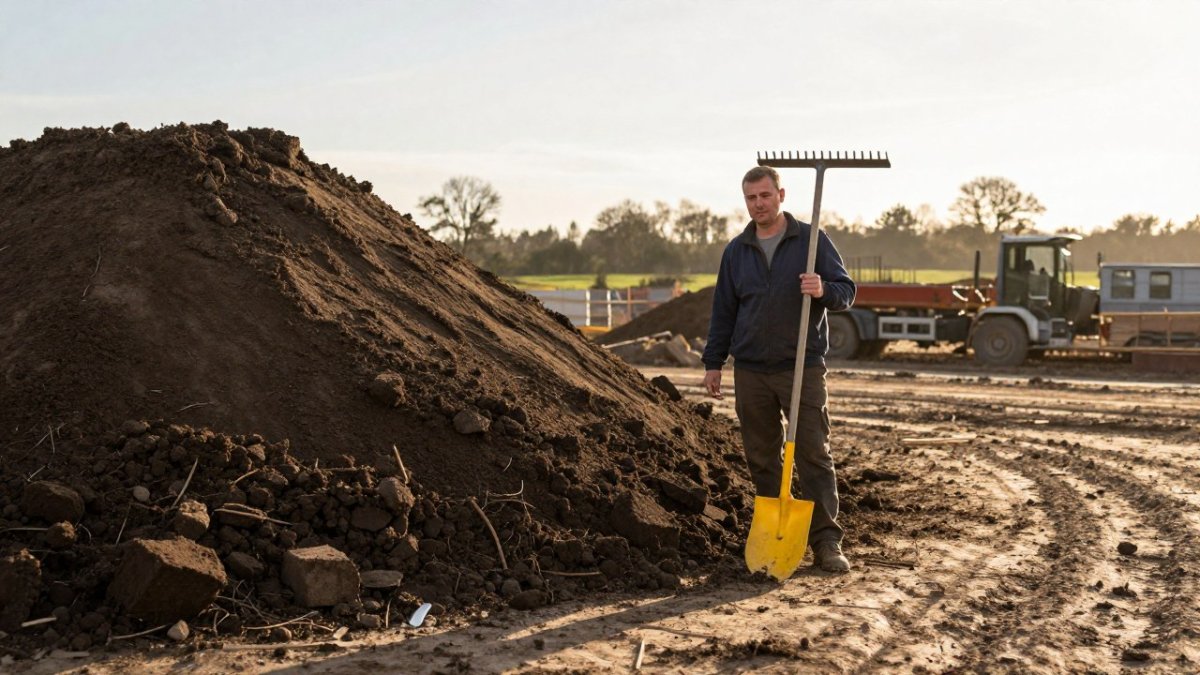
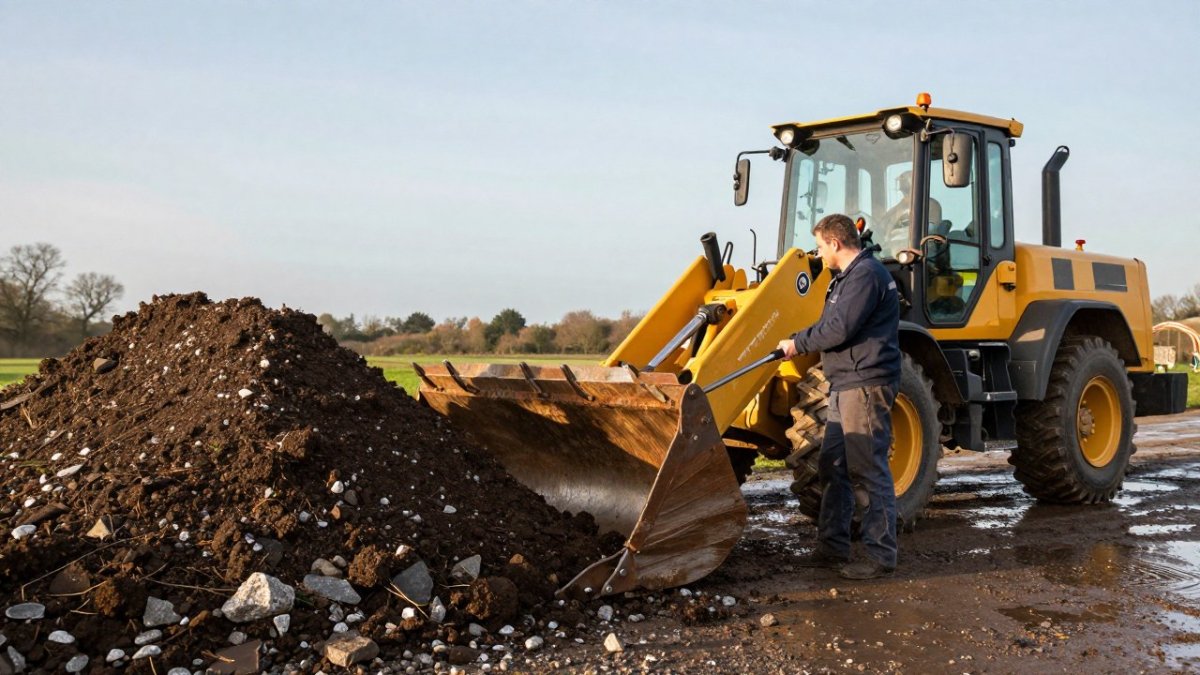
Then clear the site: strip turf, old tarmac, roots and soft spots, digging to a depth that fits your sub-base plus paving build-up, usually 150-250mm below finished level for a domestic drive. Keep edges vertical.
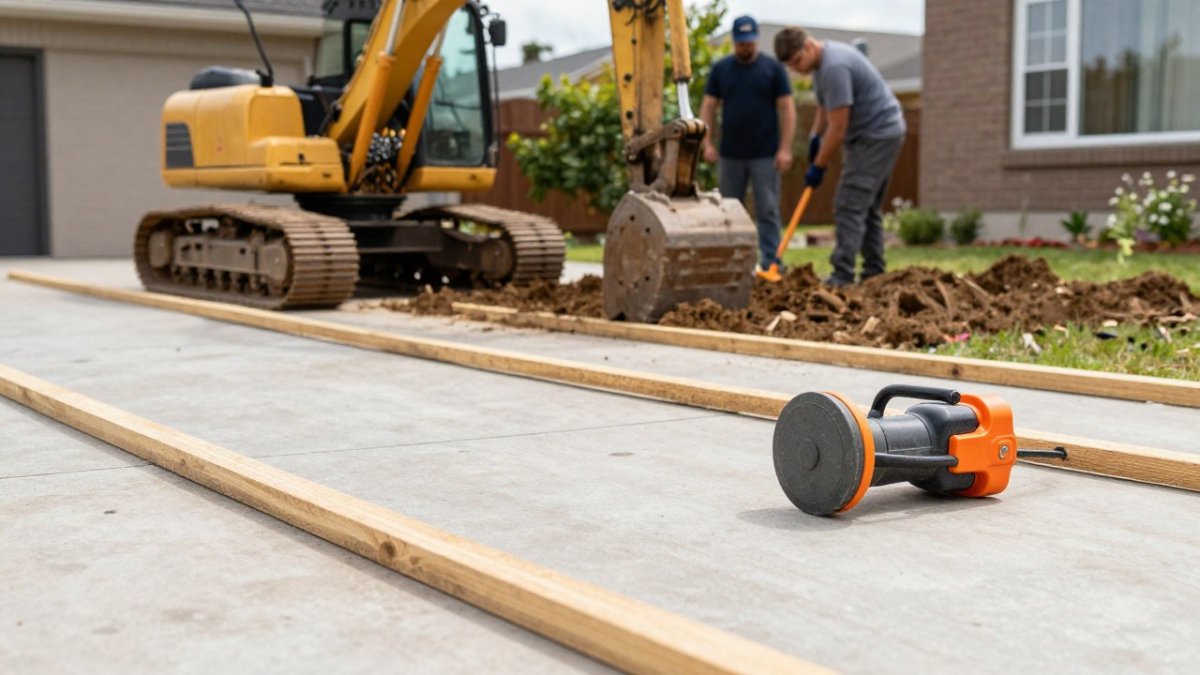
Clay holds water and heaves in winter, so it usually needs a deeper, well-compacted sub-base and a geotextile separator. Sandy or gravelly soils drain freely but can be unstable at the edges, so batter or shore the trench sides. If the base is soft, dig out to firm material rather than compacting over it.
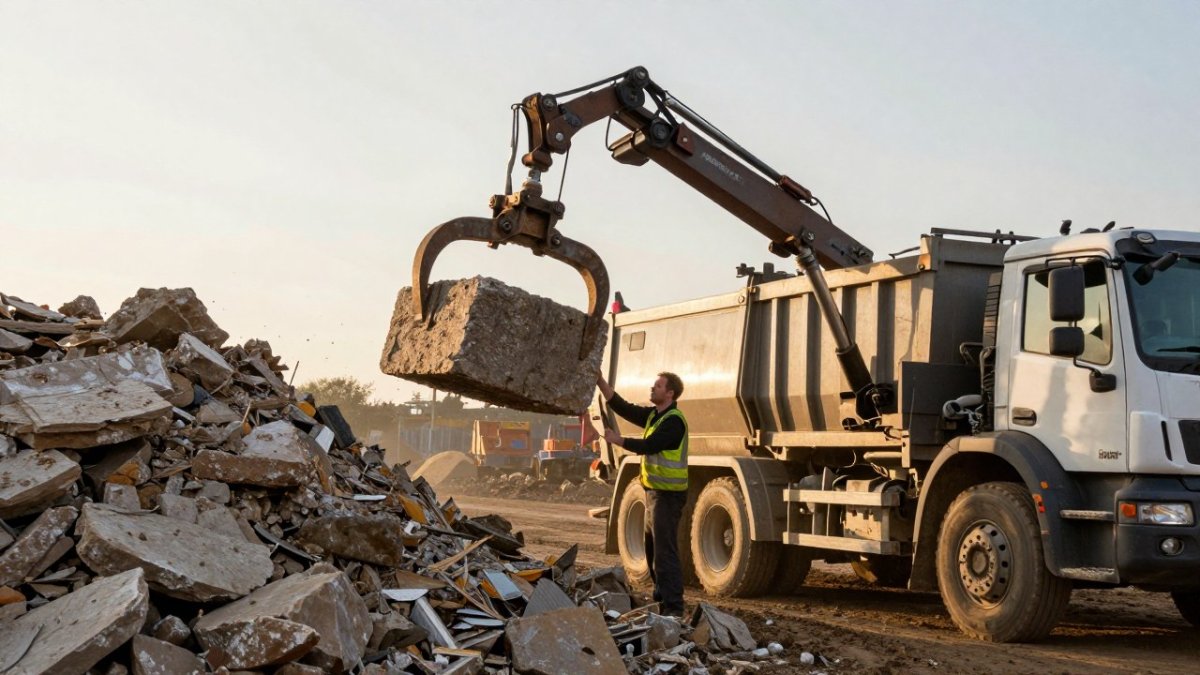
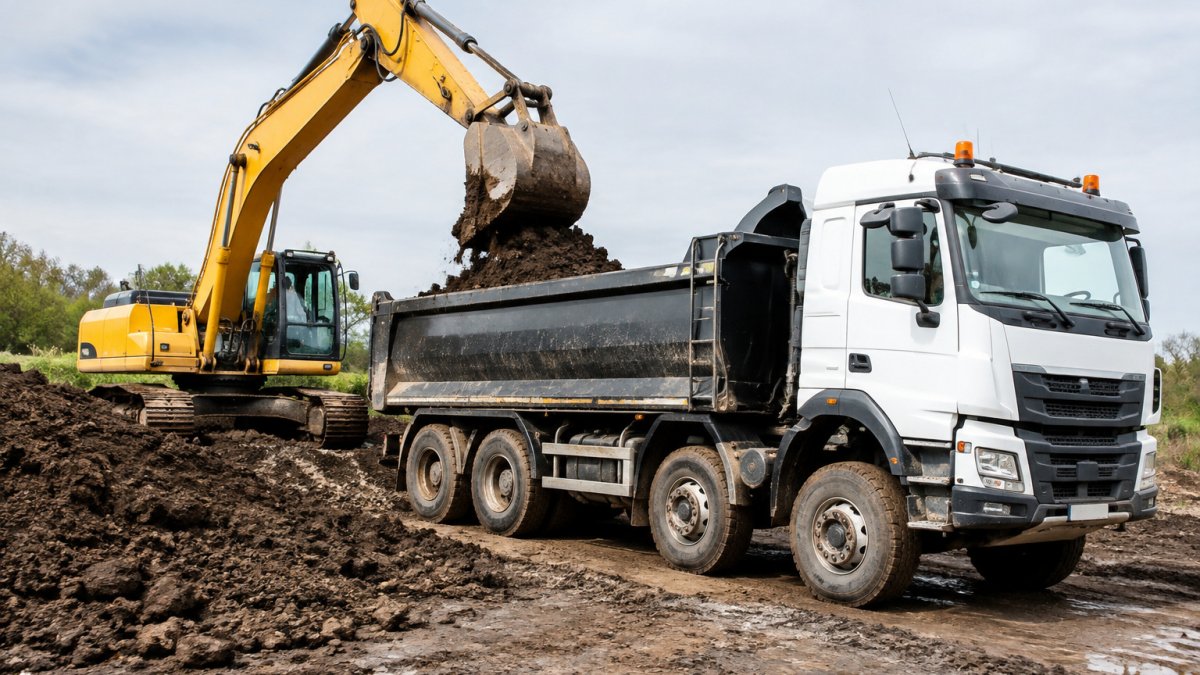
A single driveway can produce several tonnes of soil and hardcore, and off-site disposal must go to a permitted facility with the correct waste transfer note. That is where grab truck hire for site clearance saves you a week of skips and shovelling, and the haulier can handle the paperwork.
The key figures for setting out and digging out a domestic driveway are as follows.
| Item | Value | Note |
|---|---|---|
| Diagonal difference for square | More than about 20mm | Means the rectangle is out of square |
| Excavation depth below finished level | Usually 150-250mm | Fits sub-base plus paving build-up |
| Clay soil | Deeper, well-compacted sub-base | Needs a geotextile separator |
| Sandy or gravelly soil | Drains freely | Edges can be unstable, so batter or shore |
| Soil and hardcore from one drive | Several tonnes | Off-site disposal needs a waste transfer note |
Driveway Sub-Base Depth Requirements and Compaction
Driveway sub-base depth requirements depend on use and on what sits beneath. A domestic drive for cars usually needs 100-150mm of compacted sub-base; for heavier vehicles, go to 200mm. Use MOT Type 1 crushed stone, laid in layers.
Spread each layer evenly, then compact with a plate compactor or whacker plate in overlapping passes until the stone stops moving. Check levels with a straight edge as you go, and re-check the fall towards the drainage point. A geotextile membrane under the stone stops soil pumping up into the aggregate.
On clay, excavate a little deeper and use a capping layer of lower-grade granular fill before the Type 1, because clay softens and loses bearing capacity when wet. On sandy or gravelly soils the sub-grade is usually firmer, but the edges need containing.
A plate compactor is adequate for domestic depths; for deeper or heavier-duty builds, a vibrating roller gives more consistent results. Compact in layers, not all at once, and never over a saturated sub-grade.
Ordering stone means doing the sums first. Our guide on calculating aggregate needs walks through the tonnage so you do not over- or under-order.
Driveway Drainage Regulations UK and Permeability
Driveway drainage regulations UK homeowners should know centre on one rule: water must not run onto the highway. For drives over five square metres, permeable paving or a soakaway is normally needed unless the surface drains to a garden or border.
Slope the sub-grade away from the house at roughly 1:80 so water sheds correctly, and build in a fall to a soakaway or drainage channel. Poor groundwork is a common cause of drainage problems, which is why professional groundworks matter from day one.
Getting the ground right takes planning, the right aggregate and somewhere for the spoil to go. SA GRAB SERVICES handles grab hire, aggregate supply and groundworks across the region, with delivery or depot collection to suit your site. Get started with SA GRAB SERVICES and clear your site, order your stone and build a driveway that lasts.
Frequently Asked Questions
How deep should I dig for a driveway?
Dig down far enough to fit the full build-up: typically 150mm of compacted MOT Type 1 sub-base for a pedestrian or light vehicle driveway, and 200-250mm where cars or light vans regularly park. Add the depth of your chosen surface on top, plus a small allowance for bedding. The sub-grade beneath must be firm and level before you start filling, so dig a little deeper where you hit soft spots and replace them with compacted granular material.
What is the best sub-base material for a driveway?
MOT Type 1 crushed stone is the standard choice for domestic driveways. It is a graded granular material that compacts to a firm, load-bearing layer and drains reasonably well. Lay it in layers of around 100mm and compact each one with a plate compactor or whacker plate before adding the next. For permeable paving systems, a single-sized aggregate such as Type 3 may be specified instead, so check with your paving supplier before ordering.
How do I ensure proper drainage and meet driveway drainage regulations UK?
Driveways over 5 square metres should use permeable surfaces or direct rainwater to a permeable area within your property. Check with your local planning authority whether planning permission applies. Build in a fall away from buildings, and never let water run onto the highway. If the ground is clay-heavy, consider a permeable paving system with a geotextile membrane and a drainage channel at the low point.
How do I calculate the amount of aggregate needed and arrange muck away services for driveway projects?
Multiply length by width by layer depth in metres to get cubic metres, then convert to tonnes using the material's density, which your aggregate supplier can confirm. Excavated spoil usually bulks up, so order grab hire for muck away services for driveway projects before the dig starts. Pricing depends on quantity, dates, and delivery, so request a quote.